As winter fades and warmer temperatures return to Massachusetts, the natural world begins to come alive again. Spring is one of the best times of year to slow down, look around, and notice the small changes happening all around you: birds returning, frogs calling, turtles sunning themselves, and trees beginning to bud.
For campers visiting Sutton Falls Campground, spring offers a peaceful opportunity to enjoy nature before the busiest stretch of summer arrives. Located in Sutton, Massachusetts, the campground sits on Aldrich Mill Pond and gives guests a relaxing setting for outdoor recreation, birdwatching, and family time.
Whether you are an experienced wildlife watcher or simply enjoy noticing nature during your camping trip, spring is a wonderful season to explore the sights and sounds around Sutton.
Birdsong Returns to the Morning Air
One of the first signs of spring is the return of birdsong. As temperatures warm and days grow longer, many birds become more active throughout Massachusetts. Robins, cardinals, chickadees, blue jays, woodpeckers, hawks, ducks, geese, and great blue herons are all species campers may notice around wooded areas, open spaces, and water.
Early morning is often one of the best times to listen and look. Before the campground fully wakes up, birds are already busy calling, feeding, and moving through the trees. Near ponds and wetlands, larger birds such as herons may be seen standing quietly near the shoreline or perching in nearby trees.
Guests interested in learning more about birds found throughout the state can explore resources from Mass Audubon, which offers helpful information about Massachusetts birds, habitats, and conservation.
Great Blue Herons Near the Water
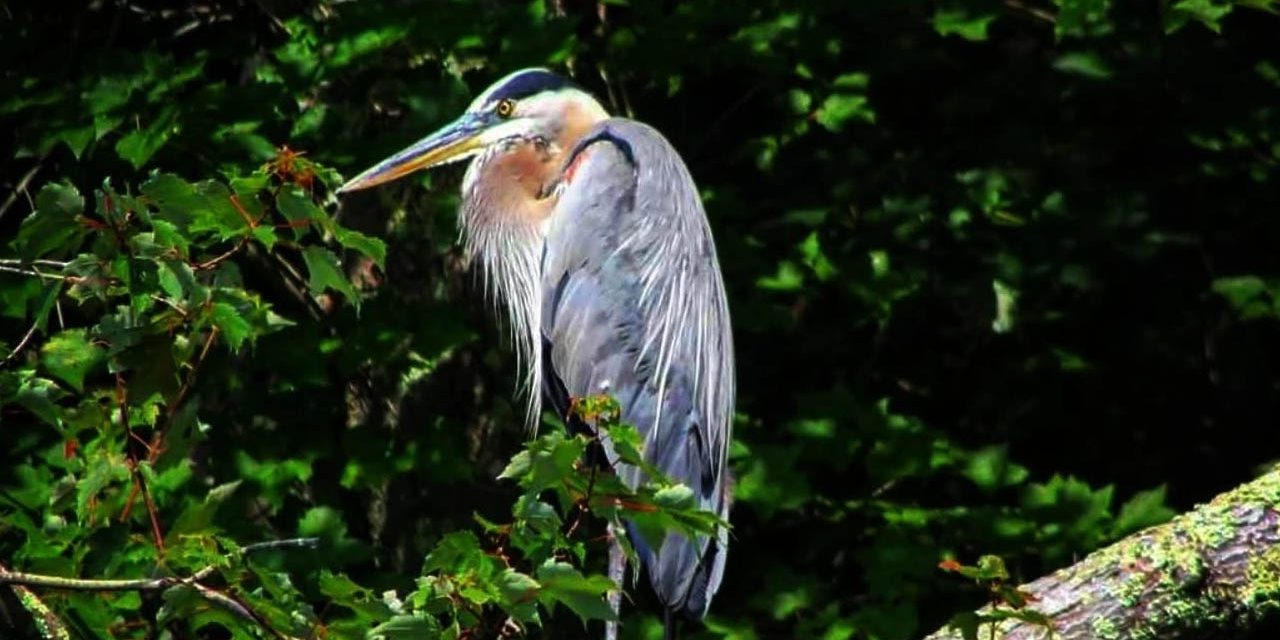
One of the most impressive birds you may spot around wetlands and ponds in Massachusetts is the great blue heron. With its long legs, graceful neck, and patient hunting style, this bird is easy to recognize and exciting to observe from a distance.
Great blue herons are often found near water, where they search for fish, frogs, and other small aquatic animals. They may stand nearly motionless along the shoreline before striking quickly, or they may fly overhead with slow, steady wingbeats.
For campers, spotting a heron can be one of those quiet nature moments that makes a spring trip feel special. It is a reminder that the landscape around Sutton Falls is full of life, even in the quieter corners of the campground.
Turtles Basking in the Sun
As ponds, wetlands, and streams warm up, turtles begin emerging from their winter resting places. One of the most common spring wildlife sightings near water is a turtle basking on a log, rock, or shoreline.
Turtles rely on warmth from the sun to help regulate their body temperature, which is why they are often seen stretched out in sunny spots during spring. Around pond and wetland areas, campers may be able to spot them quietly enjoying the warmth after a long winter.
Children especially enjoy watching turtles, but it is important to observe them from a respectful distance and avoid disturbing them. A quiet moment near the water can become one of the most memorable parts of a spring camping trip.
Frogs and Salamanders After Spring Rains
Spring evenings often bring one of the most recognizable sounds of the season: frogs calling from wetlands, ponds, and low-lying areas. Spring peepers and other amphibians become active as temperatures rise, especially after rainy weather.
Salamanders may also be seen during damp spring conditions, particularly near wooded areas and wetlands. These small creatures are an important part of healthy ecosystems and are best appreciated without handling or disturbing them.
Families can turn these spring sounds into a simple nature activity by listening carefully in the evening and trying to identify where the calls are coming from. Wildlife watching is not only about what you see, but also what you hear.
White-Tailed Deer in Open Areas
White-tailed deer are common throughout Massachusetts and are often most active during the early morning and evening. In spring, they may be seen feeding near field edges, wooded areas, and quiet roadsides.
Seeing deer can be exciting, especially for children, but it is always best to keep a safe distance. Wildlife should never be approached or fed. Watching quietly allows animals to continue their natural behavior and keeps the experience safe for everyone.
Campers who enjoy peaceful walks may find that slowing down and moving quietly increases their chances of spotting deer and other wildlife.
Waterfowl Around Ponds and Wetlands
Because Sutton Falls Campground is located on Aldrich Mill Pond, water and wildlife are naturally part of the camping experience. Spring can bring increased activity from ducks, geese, herons, and other water-loving birds throughout the region.
Guests can enjoy the pond setting while also taking advantage of campground features such as fishing, boating, swimming areas, and other family camping activities as the season progresses.
For those interested in exploring outdoor recreation beyond the campground, the Massachusetts Department of Conservation and Recreation offers information about state parks, trails, and natural areas throughout Massachusetts.
Pollinators and Spring Wildflowers
Wildlife watching does not only mean looking for larger animals. Spring also brings bees, butterflies, and other pollinators back into view as wildflowers and flowering trees begin to bloom.
Pollinators play an important role in supporting healthy habitats. Watching them move from flower to flower can be a simple but meaningful way to appreciate the connections that exist in nature.
For families, this can also become an easy campground activity. Children can look for different flower colors, watch for butterflies, or keep a list of insects and birds they notice during their stay.
Tips for Wildlife Watching During a Spring Camping Trip
Wildlife watching does not need to be complicated. A few simple habits can help campers enjoy more sightings while also protecting the animals that live in the area.
- Walk quietly and move slowly.
- Look near water for turtles, frogs, ducks, geese, and herons.
- Listen for birds in the early morning.
- Bring binoculars if you have them.
- Keep a respectful distance from wildlife.
- Never feed wild animals.
- Stay on established paths and campground areas.
- Encourage children to observe with their eyes, not their hands.
These simple steps can turn an ordinary walk into a memorable nature experience.
A Peaceful Season to Visit Sutton Falls
Spring has a special feeling at a campground. The air is fresh, the days are getting longer, and the natural world is waking up all around you. For families, couples, and seasonal campers, it is a beautiful time to enjoy a quieter side of outdoor recreation.
Sutton Falls Campground is open seasonally and offers amenities such as swimming, fishing, boating, planned activities, a playground, modern restrooms, hot showers, a camp store, and more. Guests can explore available campground amenities, review camping rates and policies, or learn more about the surrounding area through Blackstone Valley Tourism Council.
If you are planning a spring camping getaway in central Massachusetts, take time to notice the wildlife around you. From birdsong in the morning to frogs calling in the evening, spring wildlife adds another layer of beauty to every stay at Sutton Falls Campground.
Frequently Asked Questions About Spring Wildlife in Massachusetts
What wildlife can you see in Massachusetts during spring?
Common spring wildlife in Massachusetts includes songbirds, turtles, frogs, salamanders, white-tailed deer, ducks, geese, hawks, herons, and pollinators such as bees and butterflies.
Are great blue herons common in Massachusetts?
Yes. Great blue herons are commonly found near ponds, wetlands, rivers, and shorelines throughout Massachusetts, especially in areas with good feeding habitat.
What is the best time of day for wildlife watching?
Early morning and evening are often the best times for wildlife watching because many animals are more active during cooler, quieter parts of the day.
How should campers safely observe wildlife?
Campers should observe wildlife from a respectful distance, avoid feeding animals, stay on established paths, and teach children not to touch or chase wildlife.