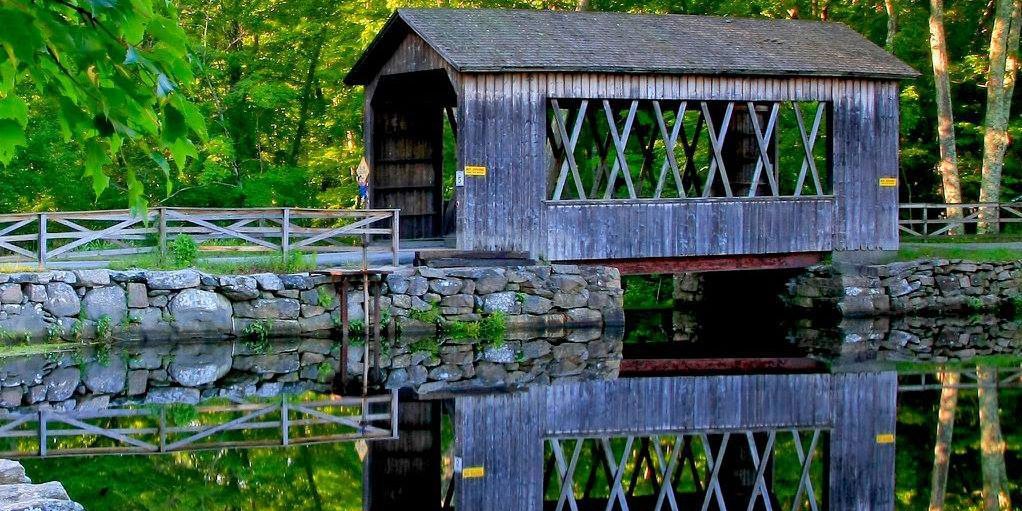
Few structures capture the spirit of New England quite like a covered bridge. Standing quietly over rivers, streams, and ponds, these iconic wooden landmarks have become symbols of history, craftsmanship, and the timeless beauty of the region. Whether you’re exploring scenic backroads or enjoying a weekend getaway at Sutton Falls Campground, covered bridges have a way of making people slow down, take a closer look, and appreciate the stories they carry.
For many visitors, seeing a covered bridge instantly creates a sense of nostalgia. Even those who have never crossed one before often feel a connection to the past. Their distinctive design and historic charm have made covered bridges some of the most photographed landmarks throughout New England, and they continue to attract travelers, photographers, and families looking to experience a piece of regional history.
Why Were Covered Bridges Built?
While they may seem decorative today, covered bridges were originally built for a very practical reason. Early bridge builders discovered that wooden bridges exposed to rain, snow, ice, and sunlight deteriorated much faster than those protected from the elements.
By adding a roof and side walls, engineers were able to shield the bridge’s structural supports from weather damage. This simple addition dramatically extended the life of the bridge, often allowing it to remain in service for decades longer than an uncovered structure.
The design proved so successful that covered bridges became common throughout New England and other parts of the northeastern United States during the 18th and 19th centuries.
The Golden Age of Covered Bridges
The mid-1800s marked the height of covered bridge construction. As towns expanded and transportation routes developed, bridges became essential for connecting communities. Skilled craftsmen designed intricate wooden truss systems capable of supporting wagons, livestock, and eventually automobiles.
During this era, covered bridges became more than transportation structures. They were gathering places, landmarks, and symbols of community pride. Farmers crossed them on their way to market, children walked through them on the way to school, and travelers relied on them to connect one town to the next.
Although many were eventually replaced by steel and concrete bridges, preservation efforts have helped save numerous examples that still stand today. Organizations dedicated to protecting historic covered bridges continue to ensure these remarkable structures remain part of our landscape.
Why Covered Bridges Continue to Fascinate Us
Part of the appeal of covered bridges is their ability to connect us with a simpler time. Unlike modern infrastructure, they showcase craftsmanship and character that are often missing from today’s construction projects.
Covered bridges also change with the seasons. In spring, they are surrounded by fresh greenery and blooming landscapes. Summer reflects their image in calm waters. Autumn frames them with brilliant displays of red, orange, and gold foliage. Winter transforms them into postcard-worthy scenes that embody the charm of New England.
It’s no surprise that travelers exploring Massachusetts travel destinations often seek out covered bridges as part of their journey.
A Unique Landmark at Sutton Falls Campground
One of the most recognizable features of Sutton Falls Campground is its own covered bridge. Beautifully positioned near the water, the bridge has become one of the campground’s signature landmarks and a favorite backdrop for photographs.
Guests often find themselves stopping to admire the bridge during a morning walk, snapping family photos nearby, or simply appreciating the reflection of the structure on the calm water below. It has become part of the character that makes Sutton Falls unique.
While campers enjoy modern conveniences and campground amenities, the covered bridge serves as a reminder of the area’s rich New England heritage and the timeless appeal of simple, beautiful design.
Creating Family Memories Around Historic Landmarks
Family camping is often about more than just spending time outdoors. It’s about discovering new places together and creating memories that last long after the trip is over.
Landmarks like covered bridges naturally spark curiosity. Children often ask why the bridge is covered, how old it is, or who built it. Those simple questions can lead to conversations about history, engineering, and local traditions.
Combined with the many family camping activities available throughout the campground, these unique experiences help create the stories families remember for years to come.
Exploring the Region Around Sutton Falls
Visitors staying at Sutton Falls Campground have the opportunity to experience more than just the campground itself. The surrounding area offers beautiful scenery, historic sites, and opportunities to explore the rich heritage of central Massachusetts.
The nearby Blackstone Valley region is known for its history, scenic landscapes, and charming communities. Travelers interested in learning more about local heritage can also explore resources provided by the Massachusetts Historical Commission.
Whether you’re planning a weekend getaway or an extended camping trip, there are countless opportunities to experience the history and beauty that make New England such a special destination.
A Lasting Symbol of New England
Covered bridges have survived generations of change, continuing to stand as reminders of craftsmanship, community, and tradition. Their beauty and functionality helped shape the history of New England, and their charm continues to captivate visitors today.
At Sutton Falls Campground, the covered bridge remains one of the property’s most beloved features. It welcomes visitors, provides a connection to the past, and serves as a memorable part of the camping experience.
If you’re planning your next camping getaway, be sure to plan your visit to Sutton Falls and experience this iconic landmark for yourself. It’s just one of the many reasons families return year after year to enjoy the beauty, history, and outdoor recreation that make Sutton Falls Campground a special place to camp.
Frequently Asked Questions About Covered Bridges
Why are covered bridges covered?
The roof and walls protect the bridge’s wooden structure from rain, snow, and sunlight, helping it last significantly longer than an uncovered wooden bridge.
How many covered bridges are left in New England?
Hundreds of historic covered bridges remain throughout New England, with many preserved as landmarks and tourist attractions.
Why are covered bridges popular tourist attractions?
Covered bridges combine history, architecture, engineering, and scenic beauty, making them popular destinations for photographers and travelers.
Does Sutton Falls Campground have a covered bridge?
Yes. The campground features a covered bridge that has become one of its most recognizable landmarks and a favorite backdrop for guest photos.